Origin

How Sagetor began

Sagetor began with lived-experience advisory. The work was grounded in the knowledge of people directly affected by the systems and services being changed, not only the people designing them.

The practice exists because people asked for it. The Principals were already doing this work in their own capacities, and the clients they were doing it for asked whether they could keep engaging them properly. Sagetor was formed in answer to that. It is also why there was no website for a long time: the work was arriving through people who already knew the standard it was held to.

As those clients asked for more than advice, the work broadened. Sagetor now helps organisations work through strategy, products, finance, organisational improvement, responsible technology adoption and social impact, while keeping the realities of people and institutions in view.

That origin still shapes how we work. We bring together professional experience, lived experience and practical evidence, then test ideas against what organisations and the people they serve can actually use. The experience set out on the experience page was accumulated before Sagetor existed and is not presented as work delivered under the Sagetor name.

The Principals

Your point of contact is always a Principal, and which Principal depends on the work and the stage it has reached.

That Principal scopes the engagement, coordinates the work and remains accountable for it. Delivery is carried out by the Principals, by trusted consultants, or by both. Current specialist capability includes risk, fraud risk and anti-money laundering.

The experience the Principals bring was accumulated through prior personal roles, advisory positions and work with other companies. It predates Sagetor and is not presented as work delivered under the Sagetor name.

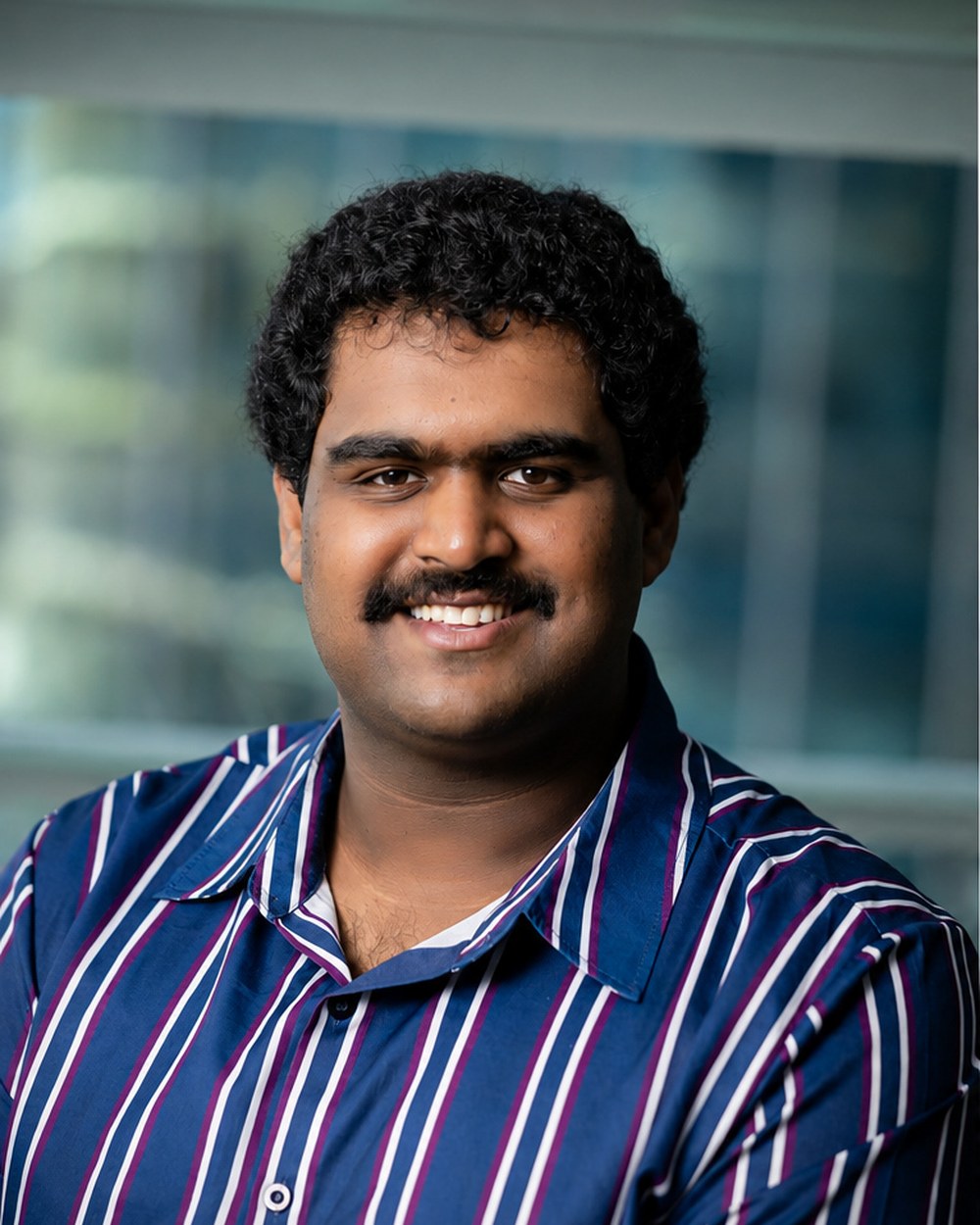
Ankith Arun Aswath, Co-Founder and Principal

Ankith Arun Aswath

Co-Founder & Principal

Ankith advises where strategy has to be reconciled with the numbers and with what an organisation can realistically carry. His prior work includes advising on multi-million-dollar projects and initiatives, including major hospital expansion programs, as well as advisory committee and executive-level work in complex organisations.

Alongside his advisory work, Ankith serves as Regional Lead for Asia Pacific and Oceania at the Global Youth Tech Assembly through the Global Shapers Community, an initiative of the World Economic Forum. He is also Chairperson of the Disability and Accessibility Working Group at UN Youth Australia. These are Ankith's personal appointments. They are not Sagetor engagements, and they do not represent any endorsement of, employment by, or partnership with those organisations.

He has advised chief executives directly, alongside peak bodies and established companies. With founders at the conceptual stage his work runs from idea validation and proposition refinement through pivot recommendations and early strategic direction, to preparing a pitch before it reaches venture capital. His technical grounding is in mortgage broking, quantitative analysis and financial modelling. He holds a Certificate IV in Finance and Mortgage Broking.

Shilpa Arun, Co-Founder and Principal

Shilpa Arun

Co-Founder & Principal

Shilpa advises on the commercial engine of a business: what it costs, what it returns, whether the numbers hold, and whether the business is ready to be funded or sold. She has worked in and advised businesses built from the ground up and helped them scale, including companies that later sold for multi-million-dollar outcomes. These were engagements with and for other companies rather than businesses she owned.

Her work covers startup finance and CFO-level responsibility, accounting operations, commercial management and financial analysis, cost management and finance-function improvement, business planning and modelling, management reporting and controls, financial due diligence, and fundraising and transaction readiness.

The practice

Why the capabilities sit together

The practice brings together experience in developing websites, applications, products, frameworks, algorithms and strategic documentation, alongside work inside government, healthcare, financial services, research, startups and community organisations.

That combination is the point. Strategy that ignores delivery produces documents. Delivery that ignores strategy produces waste. Engagement that ignores both produces cynicism.

Sagetor sits deliberately at the intersection. A client's problem does not have to be split across three firms and then reassembled at the client's own risk.

The model gives clients broad strategic and delivery capability without the cost, complexity or distance that can accompany larger firms. Every engagement has one accountable point of contact and senior attention throughout.

We begin by defining the real problem. We end with something you can use.

What we believe

Convictions the work runs on

Clarity precedes everything

Most expensive failures are definition failures. Time spent framing the real problem is the highest-return work in any engagement, which is why it always comes first.

Evidence over enthusiasm

Assumptions get tested while they are cheap to be wrong about. Advice is grounded in what the evidence supports, including when the evidence says stop.

Artefacts over slideware

Engagements end in things a client can use: a working system, a buildable specification, a framework that survives contact with Monday morning.

People are part of the system

Services, products and policies work when the people affected help shape them. Engagement is a design discipline, not a compliance exercise.

How we work

The Sagetor Method

Five stages, applied in proportion to the problem. Small engagements might move through them in weeks; complex ones return to earlier stages as the picture sharpens. The sequence is the discipline, not a straitjacket.

  1. 01

    Frame

    Define the real problem, who it affects and what a good outcome looks like. Agree what is out of scope, which is half the value.

  2. 02

    Diagnose

    Understand context, stakeholders, constraints and evidence. Test the assumptions the plan depends on before they become commitments.

  3. 03

    Design

    Prioritise options and shape the response into concrete artefacts: strategies, requirements, prototypes, frameworks, plans.

  4. 04

    Deliver

    Support implementation directly, from pilots and builds to training and rollout. Advice that stops at the recommendation is unfinished.

  5. 05

    Embed

    Review outcomes, adjust what has not worked and transfer capability so the improvement continues without us.

What to expect

Working with Sagetor

Expect direct communication, honest scoping and work sized to the problem rather than to a billing target. Expect assumptions to be challenged, including your own brief. Expect deliverables you can pick up and use, and a clear view at each stage of whether continuing is worth it.

Engagements are structured so value lands early: a defined first phase with its own useful output, before any longer commitment is discussed.

What we will not do

The refusals that protect the work

We will not recommend AI, or any technology, where it does not improve the work. We will not present borrowed frameworks as insight, pad engagements to look substantial, or tell a client what they want to hear when the evidence points elsewhere.

We also stay inside our authority. Sagetor does not provide legal, taxation, personal financial or investment advice, or clinical mental-health or medical care. Where a problem needs those professions, we say so and work alongside them.

The name

What does Sagetor mean?

We chose the name Sagetor to suggest a summit of wisdom: a place where experience, evidence and different forms of expertise come together before an important decision is made.

It also carries the idea of the wise one. Not as a claim to certainty, but as a standard for how we work: listen carefully, test assumptions, speak plainly and give advice that can be acted on.

For purpose

Ten per cent of the profit, to a charity the client chooses

Sagetor is a for-purpose advisory practice. For consulting engagements that generate a profit, we will contribute 10% of the profit attributable to the engagement to a registered charity chosen by the client.

The contribution is worked out after the engagement's costs have been finalised, including the cost of the time we put into it. No contribution is due where an engagement breaks even or makes a loss. The calculation, the nominated charity and the timing are recorded in the engagement agreement.

What this is, and is not

  • Sagetor is a business. It is not a charity and not a not-for-profit organisation.
  • The contribution is made by Sagetor from its own profit. It is not a donation by the client, and it gives the client no tax deduction.
  • The client nominates the registered charity. Where a client does not nominate one, the contribution is shared between MS Australia and Beyond Blue.
  • The charity has to be at arm's length. Nobody involved in the engagement, on either side, may hold office, employment or a financial interest in it. We chose MS Australia and Beyond Blue out of personal interest in their work, and hold no position or interest in either.
  • The commitment applies to consulting engagements. Where an engagement does not turn a profit, nothing is owed and nothing is claimed.

We do this because we want to, not because anyone requires it of us. The method for working out the profit is set out in full in the website terms, including why nobody involved in an engagement can profit from the choice of charity.

Start a conversation

See whether the fit is right

The fastest way to evaluate a consultancy is to give it a real problem and watch how it thinks. Send us one.